Cultural traits
Shaped by history, scarcity, and tradition, both cultures display deep-rooted pragmatism, frugality, improvisation, resilience, urge to blend heritage with modernity, inclination toward conserving resources and maximizing output from limited means, efficient use of local materials, tendency to reuse, repurpose, avoid waste and value individual creative expression in craft and built environment. These traits originate from long cultural histories and identities.

In Portugal, dishes like açorda or sopa da pedra use stale bread and simple ingredients, old clothes become cleaning cloths, tools are repaired instead of discarded. Similarly in India, leftovers transform into new dishes (parathas from leftover vegetables), old sarees become quilts (godadis), broken items are fixed by street craftsmen, and “jugaad” (frugal innovation) is celebrated.
In Portugal, dishes like açorda or sopa da pedra use stale bread and simple ingredients, old clothes become cleaning cloths, tools are repaired instead of discarded. Similarly in India, leftovers transform into new dishes (parathas from leftover vegetables), old sarees become quilts (godadis), broken items are fixed by street craftsmen, and “jugaad” (frugal innovation) is celebrated.
Expression in built environment
In built environment, designers and people of both nations deeply value creative expression which acts as a canvas for storytelling, cultural memory, and artistic innovation. Both cultures design with a rich blend of heritage and modernity, incorporating influences from diverse cultures, resulting in built spaces that are both timeless and contemporary. Use of traditional elements, materials, patterns, textures and motifs celebrate their cultural legacy, merging artisanal tradition with modern aesthetics.
Other contemporary issues
Both countries show significant similarity in addressable issues in built spaces, though degree and focus may vary. Be it balancing functionality with aesthetics and creativity, efficient use or economy driven densification of spaces, minimizing energy-use while maximizing comfort for better productivity, tackling underemphasized issues of noise and privacy, budget and time constraints, quest for materials with unique appeal and long-life cycle, urge to express societal and individual narratives– most issues are now universal.
Cultural attitudes indicate more such requirements
Creativity and Expression The importance of cultural legacy, bold individual identity, and creativity in both cultures leads to a demand for expressive and personalized space design.
Frugality and Innovation The historical value of “Doing more with less,” thrift, and resourcefulness translates into a need for efficient layouts, multi-functional furniture, and a preference for modularity-scaling as required.
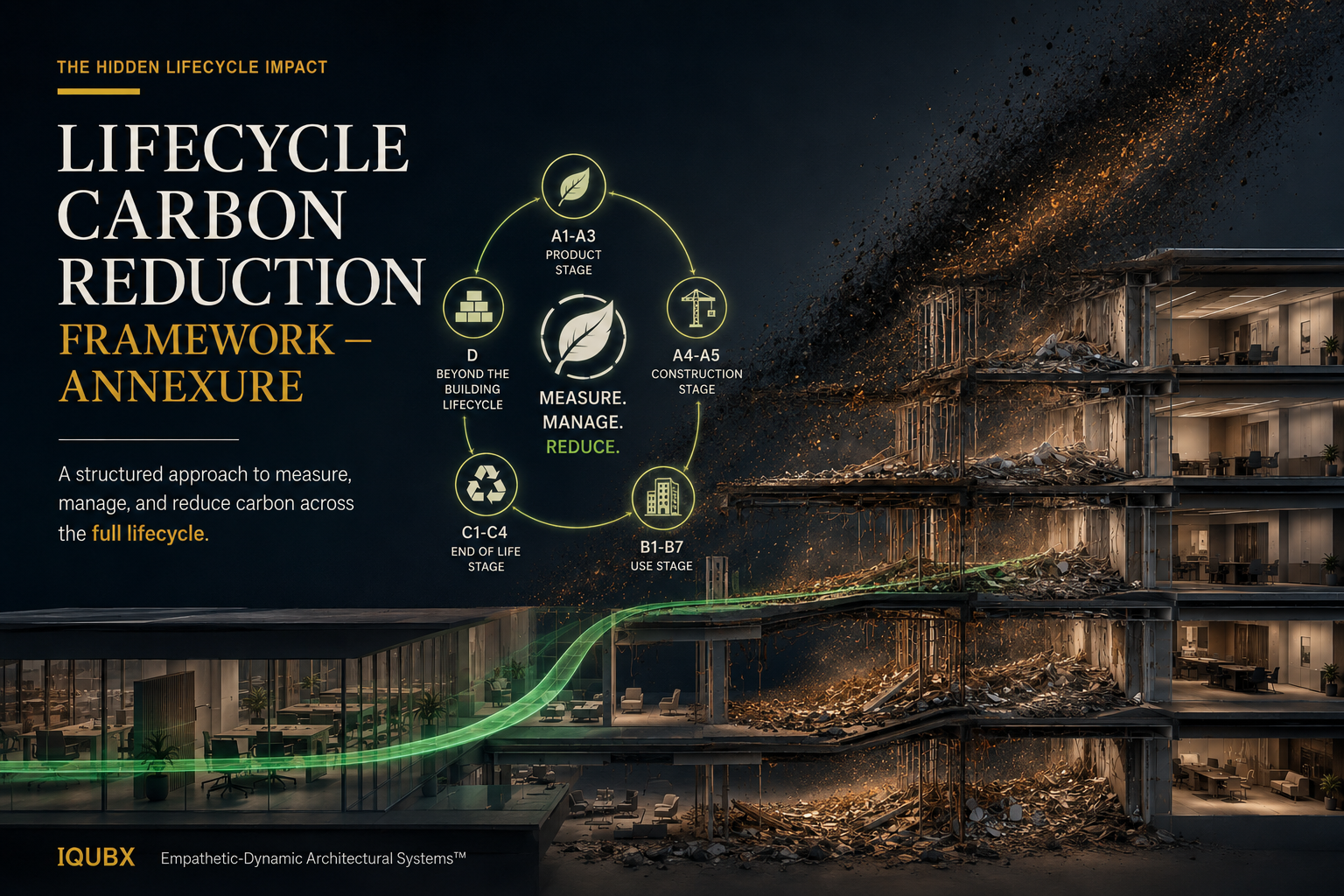
Sustainability and Circularity Respect for resources and waste avoidance fuels the push for a circular economy (repair, reuse), requiring building materials to be recycled and subsequently reusable.
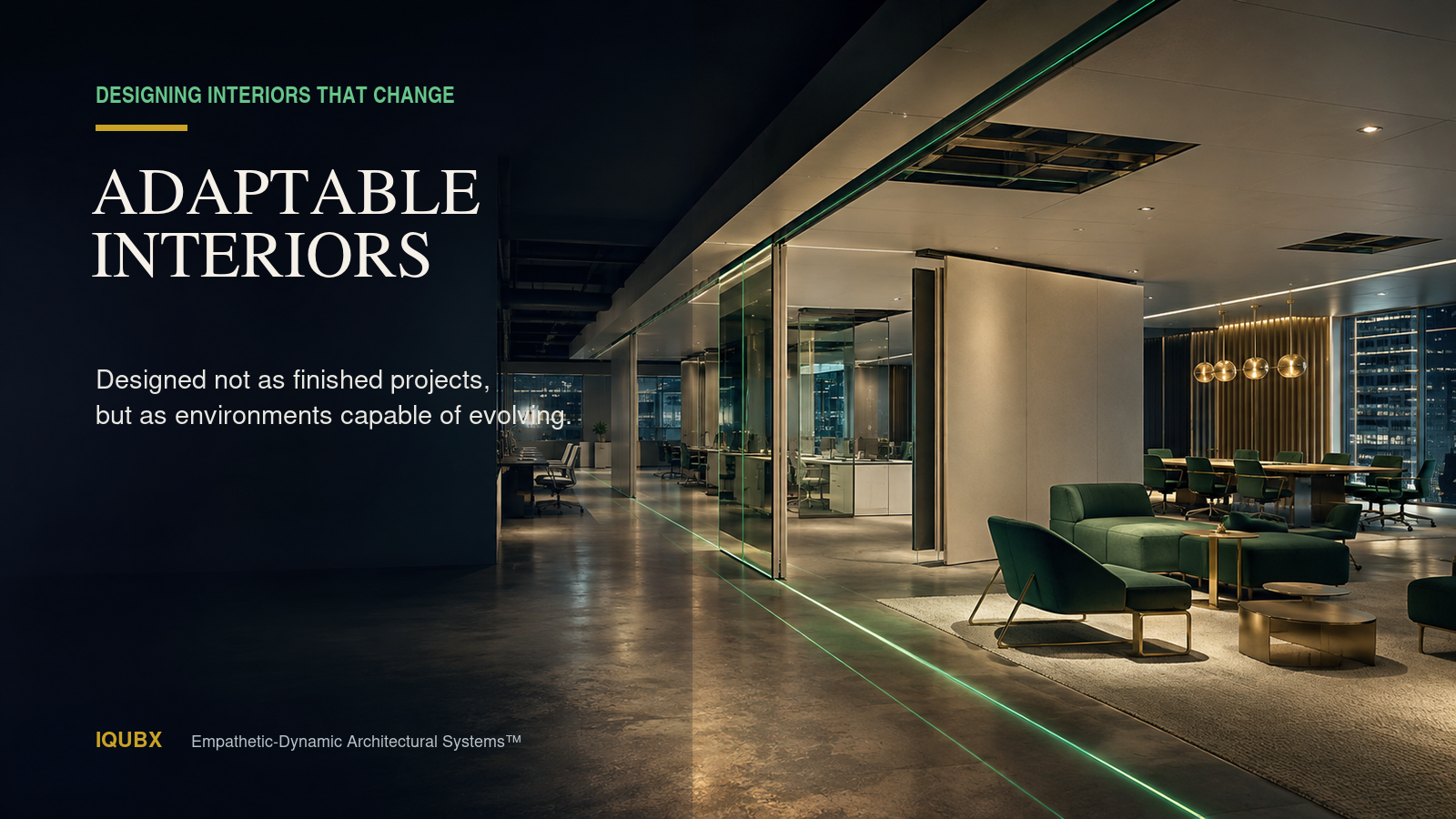
Adaptability and Resilience Designing for change and living with uncertainty dictates spaces that are flexible, adaptable, and resilient to change.
Need for a Framework
Optimizing and balancing everything while designing experiential and memorable spaces is daunting. A framework with structured innovative approach can help optimally address and mainstream these aspects consistently.
An architect and industrial designer from School of Planning and Architecture, New Delhi, I was sensitive to these cultural traits and concerns. Having steered towards interior spaces early in my career, I sought available resources to consistently access solutions to these pressing problems. Most important, I wanted to meaningfully express myself as a designer rather than just curate existing systems and materials in mainstream projects. I quickly grew frustrated and impatient.
Defining a Framework
I realized I wanted traditional customizability using mass manufactured modular systems, a dichotomy I had to resolve by designing my own framework and systems. I had to design modular systems highly customizable to diverse project requirements and my creative expression, simultaneously addressing wider aspects of sustainability. These systems had to be desirable and affordable enough for mainstream projects rather than just elite ones.
This required an innovative and sustainable approach. I became aware of the task’s enormity and many constraints including time, finances, experience, infrastructure. My frustration for lack of available solution transformed into a daunting challenge to create one myself.
I Ennovation? and sustainable sustainability?
My biggest breakthrough was the paradigm shift – realizing that design constraints are ideal for driving Innovation and sustainability —solutions born from “constrained environments“. The shared trait of “Less is more” became highly relevant.
For consistent results, innovation must permeate the team’s processes, guided by a core vision. I termed this approach “E-nnovation,” or entrepreneurial innovation. To ensure long-term viability, sustainability needed a wider focus—beyond environmental impact, to include project and stakeholder sustainability. I called this “sustainable sustainability“.
Our systems had to be affordable, desirable, reconfigurable, repairable, high performance, low energy embedded with long life cycle, reusable or repurposable and conducive to creative flexibility without legislative mandate, subsidization or incentivization.
Designing the Framework
I endeavoured to create a framework for designing and manufacturing innovative, sustainable, modular, and scalable solutions. This framework allowed for high customizability, creative expression, cost-effectiveness, and high performance. It could design new custom solutions while minimizing Financial, Temporal, and Environmental costs (FTE costs).
Since constrained conditions demanded maximizing output from minimum resources, my first modular system was designed with minimum components. These could be assembled in diverse configurations for adaptability or into completely different system solutions.

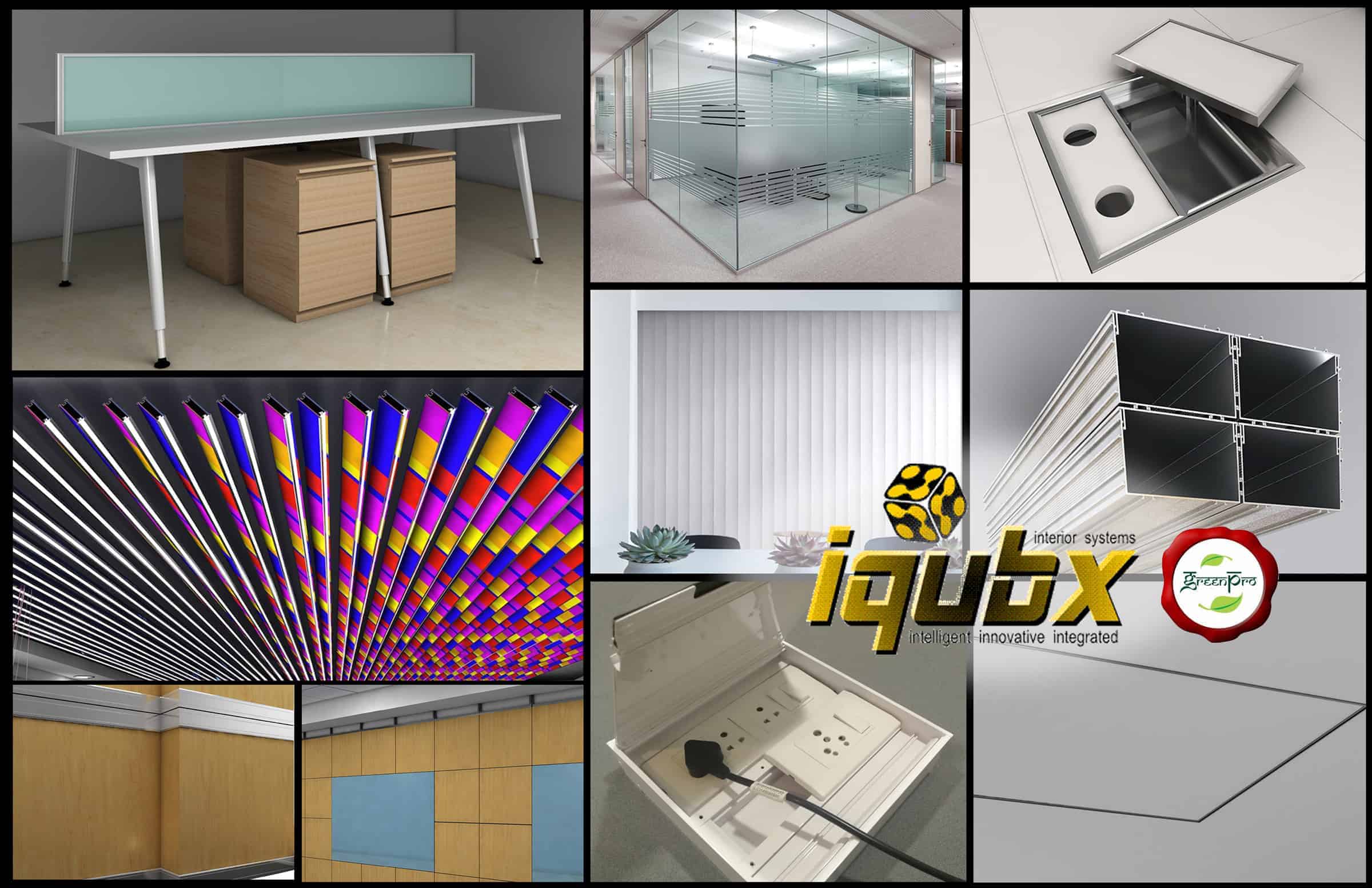
I chose recycled aluminium as the base raw material due to its manufacturability, high detailing level, infinite recyclability, climatic resistance, and suitability for scalable manufacturing via extrusion. My first product, a “floor junction box” for interiors, was patented. It is fabricable on site in any size, incorporates any floor material in the lid, and can adapt as a ceiling trap door. It was certified Type 1 Ecolabel by India’s only accredited sustainable product certification authority, Products and Services Council, a Confederation of Indian Industries body.

Subsequently, I designed many other high-performance, customizable, and Type 1 Ecolabel certified products. An exemplary product is a glass partition with sound insulation of STC54, reportedly one of the highest in world. It uniquely accommodates flexible glass configurations (single, double, laminated, VIG/DGU) of various thicknesses at any point in its life cycle, which saved the cost of developing multiple models (higher FTE costs), our initial intention. Some glass partitions we designed use true mechanical joinery (no silicon adhesives) and accommodate varying grid sizes, allowing diverse materials like colored glass, ceramics, wood, and metal artwork for maximum creative freedom.
Another patented modular system is a baffle ceiling shapeable into different sizes and holding diverse changeable finishes like cork, stone veneers, PET panels, and mineral tiles. We designed modular partitions with customizable creative elements and modifiable or relocatable later, wall panels replacable individually instead of whole system, saving cost and waste. Our modifiable, relocatable partitions and reconfigurable workstations adapt to changing spaces and evolving office layouts.
All products maintain consistent parameters: cost-optimization, low carbon footprint, long life cycle, scalability, future modifiability, higher performance, and greater creative freedom. All are Type 1 Ecolabel certified, making us the country’s largest producer of green-certified building products today
The Framework
- Design from minimum components for minimum financial, temporal & environmental – FTE costs
- Assembly of components into diverse flexible configurations for focussed solutions and creative expressions – better user requirement fit for longer usability
- Use of components across diverse systems to further reduce FTE, inventory & logistics costs
- Standardized modular joinery allowing assembly across systems – easy assembly & dismantling
- Use of single raw material, recycled aluminium, for easy segregation and infinite recyclability
- Use of scalable manufacturing – extrusions, for optimizing low volume requirements, essential for adaptability and mainstreaming
- An out-of-box mindset of maximizing the minimum resources and commitment to the vision, working rigorously to create systems with creativity, innovation and sustainability
Such a system can be adapted to design and construction of whole buildings and interiors, not just modular systems. Translation of this framework into design and build of buildings and complete interiors may be relevant and would depend on architects and designers pondering and discussing more on it.
Overlap with Event Exhibition Design
The same framework approach was used in designing and fabricating for the exhibition display at the central atrium of iconic Indian Habitat Centre, New Delhi, where exemplary works of Architects of both nations have been displayed.
The celebratory nature suggested a centre focussed display with arms of display panel structures emanating in eight cardinal directions, pulling in people from all directions.
The structures have been configured in a central square and arms in wave pattern to make them self-standing and withstand strong wind created by venturi effect in the space. The layout suggests surya or sun, which holds deep symbolic, religious, and cultural importance in both Spanish and Indian traditions, and wave patterns remind one of solar rays and decorative patterns in various cultures and religions, symbolizing power, resilience, and transformation.


The frames have been made from aluminium tubes powder coated in flag colours of both nations, assembled modularly for quick assembly, dismantling and easy reuse. The aluminium tubes are to be reused by cutting them into brackets for assembling our modular systems. The display panels are mounted with thin steel wires, which will again be reused for our ceiling trap doors.
The entire design highlights the framework of using minimum elements, being conscious of reuse and upcycling, modular joinery for quick assembly & disassembly, and ample creative expression.
The author, Amit Garg, is an architect and masters in industrial design from the school of planning and architecture, New Delhi. He is a passionate inventor, innovator and entrepreneur, and founder of Iqubx, a company with a mission to give innovative and sustainable solutions to the global interior community and industry through unique customizable modular solutions.
https://www.linkedin.com/pulse/relevance-shared-cultural-traits-contemporary-built-environment-garg-e0ojc/