In the first article of this series, we explored how noise – especially unpredictable, non-periodic sound – disrupts focus and cognitive performance. But the implications of unmanaged acoustic environments go far beyond productivity.
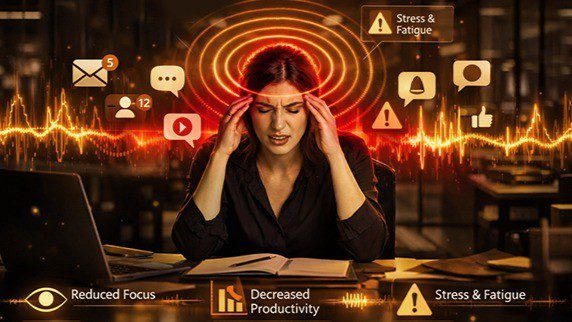
When exposure to disruptive noise becomes chronic, the impact shifts from momentary distraction to something far more serious: long-term physical and mental health consequences. What begins as loss of focus quietly accumulates into fatigue, stress, disease risk, and societal burden.
This article examines that deeper cost – and why noise is no longer just a workplace comfort issue, but a public health and leadership concern.
Chronic Noise as a Physiological Stressor
The human body does not distinguish sharply between psychological and physical stress. When exposed to persistent noise, especially sound perceived as uncontrollable or unpredictable, the body activates its stress response systems.
Research shows that chronic noise exposure triggers activation of the hypothalamic–pituitary–adrenal (HPA) axis, leading to elevated stress hormones such as cortisol and adrenaline, which in turn contribute to increased heart rate, blood pressure, and metabolic strain .
The World Health Organization identifies environmental noise as a significant environmental health risk, second only to air pollution in its contribution to disease burden in urban populations .

From Noise to Chronic Disease
Large-scale epidemiological research correlates prolonged noise exposure with:
- Hypertension and elevated cardiovascular risk
- Increased incidence of coronary events
- Sleep disruption, which further worsens metabolic and cardiovascular health
A comprehensive review in The Lancet and supported by WHO data indicates that long-term noise exposure contributes to cardiovascular morbidity even at sound levels common in urban and work environments .
While much of this research originates in environmental noise (transportation, urban settings), the biological mechanisms are applicable to indoor spaces, including poorly designed workplaces where noise is unpredictable and persistent.

Noise and Mental Health: The Invisible Epidemic
Beyond physical health, chronic noise exposure has documented impacts on psychological well-being.
Persistent auditory disruption is associated with:
- Increased anxiety and irritability
- Reduced emotional regulation
- Cognitive fatigue and burnout
- Higher prevalence of depressive symptoms
Occupational health psychology identifies noise-induced cognitive load as a contributor to emotional exhaustion, a core dimension of burnout syndrome .
Importantly, noise rarely acts in isolation; it amplifies existing pressures, such as longer work hours, performance demands, and the blurred boundaries of remote work. Under these conditions, the brain seldom enters a state of true recovery.
The Ripple Effect: From Individual to Society
The consequences of unmanaged workplace noise extend well beyond the individual:
At the individual level
- Reduced resilience and cognitive capacity
- Increased risk of stress-related illness
- Decline in emotional and psychological well-being
At the family level
- Longer work hours due to lower productivity
- Stress spillover into personal life
- Reduced restorative sleep and recovery
At the organisational level
- Increased absenteeism and presenteeism
- Rising healthcare costs
- Lower engagement and higher turnover
At the societal and national level
- A growing mental health burden
- Increased strain on healthcare infrastructure
- Reduced economic participation and productivity
According to the World Health Organization, stress-related mental health conditions already represent a significant and growing global economic burden, affecting workforce participation and societal well-being .
In this context, noise is not a marginal factor-it is a multiplier of systemic stress.

Why Leadership Can No Longer Ignore Acoustics
Traditionally, workplace noise has been treated as an HR issue, a facilities problem, or a nuisance to be tolerated. That framing is no longer tenable.
When environmental conditions contribute to:
- Chronic physiological stress activation
- Mental health decline
- Increased risk of disease
…they become matters of organisational responsibility and employee care.
Just as organisations now recognise the importance of ergonomics, air quality, and lighting, acoustic health must be integrated into duty-of-care strategies.

A Design-Led Path Forward
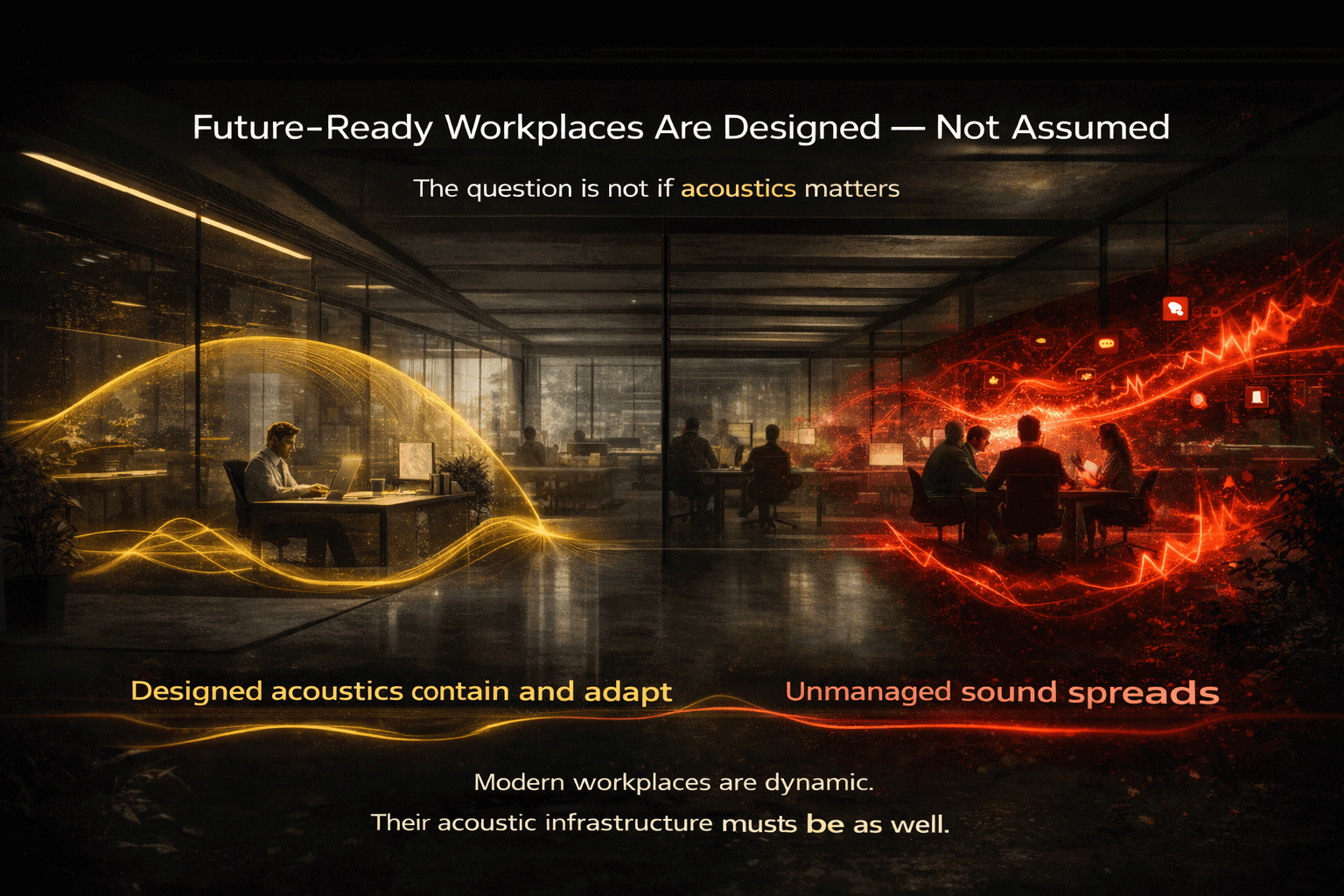
The encouraging reality is that noise-related health risks are not inevitable. They are design-mediated.
Thoughtful acoustic design -from controlled sound transmission and predictable zones to recovery spaces -reduces cumulative stress load and supports both physical and mental health.
This demands moving beyond superficial fixes and treating acoustics as a core performance parameter, fully integrated into workplace planning and design thinking.
What Comes Next
If noise affects cognition and health profoundly, the next logical question is:
How do we design workplaces that support both collaboration and recovery -without sacrificing flexibility or openness?
In the final article of this series, we explore how contemporary acoustic design -from zoning strategies to high-performance partitions and pods -offers a practical, future-ready response to one of the most underestimated challenges of modern work.
Related Posts
About The Author

Amit Garg
CEO, IQUBX - Amit is an architect, Product Designer, Entrepreneur, ino-ventor, based in New Delhi, capital of India. Having an experience of more than 20 years in field of architecture. Subscribe to regular updates by IQUBX